
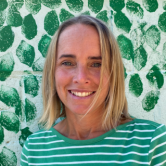
Mrs Josephine Burt
Class Teacher
Miss Jemima Grigg
Class Teacher

Mrs Beth Hay
Class Teacher
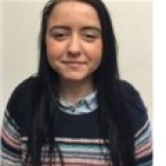
Miss Leah Horrocks
Teaching Assistant
Homework
- Reading should be enjoyed daily. The children will have Accelerated Reader books pitched to their correct level but are also encouraged to read wider books for pleasure. Parents are encouraged to read aloud to their children at home, discussing books, and creating a positive reading environment. Reading independently, reading together and across a variety of genres are all beneficial as are audio books.
- We encourage the children to practice times table facts as often as possible as these are expected to be fluent by year 5 and 6. Please practise these regularly as part of the weekly homework. Practise the tables that are found most difficult.
- For Year 6: additional homework may be sent home to reinforce and practise basic concepts in English and maths.
- Spellings: These are practised daily, every morning, in school where children will learn about the morphology of words - roots , suffixes and prefixes. There will not be a formal weekly spelling test, but spellings will be assessed periodically to monitor their progress. Practising spellings and handwriting as part of your homework will be beneficial. The statutory spellings for both upper and lower KS2 are shown on this page.
Autumn Term 2026
This term, Oak Class (Year 6) will be exploring the theme of Leading the Future, asking the big question: 'What makes a strong community?' Through our learning and our end outcome of forming a St Mawgan Youth Council, pupils will investigate how communities are built, supported and led, considering the importance of integrity and self-belief in creating positive change. We are excited to both welcome in visitors and local representatives from the community as well as explore local landmarks as we consider democracy, justice, crime and punishment, and the role individuals play in shaping society. We will also consider our future aspirations and career pathways to becoming valued members of our future communities.
Our English lessons will be inspired by the classic novel Holes by Louis Sachar. After our initial unit learning about sentence construction, punctuation and grammar (PVPG), pupils will use these skills to write a range of genres inspired by our class text. These will include non-chronological reports, explanations, instructions, balanced arguments, courtroom speeches and character studies, and will develop their ability to write for different audiences and purposes.
Maths lessons will continue to follow the White Rose scheme of learning, this term focusing on: Place Value, Addition, Subtraction, Multiplication and division, Fractions and Measurement
In science, we will be learning about living things and their habitats, including classification and how scientists group organisms using observable characteristics. We will also explore the forces that affect our world through a unit on forces, investigating gravity, friction, air resistance and water resistance.
In history, pupils will study crime and punishment, examining how laws, justice and punishments have changed throughout British history and considering how these changes have helped shape modern society.
Our geography learning will focus on biomes and ecosystems, exploring how environments around the world compare with our own local ecosystem in St Mawgan and Cornwall.
In Design and Technology, children will take on the role of architects and community planners as they design and build a Community Hub for St Mawgan, creating scale models to meet the needs of local residents.
In Art and Design, pupils will sketch and record their observations during visits to local civic buildings, considering how spaces can be designed to bring communities together.
Our RE learning will explore the Hindu concepts of karma, dharma, samsara and moksha through the question “Why do Hindus want to be good?” We will also consider the relationship between creation and science, debating whether scientific and religious views can complement one another.
In PSHE, pupils will focus on the units 'Me and My Relationships', developing their understanding of respectful relationships, responsibility and belonging within a community, before moving onto 'Valuing Differences'.
In PE on Thursdays, we will develop teamwork, communication and tactical thinking through invasion games, while our dance unit, Dynamic Dance: Mighty Movers, will explore movement inspired by body systems and physical performance. We will also explore the value of a fit and healthy lifestyle though active sessions on a Wednesday.
In music, we will learn and perform songs for the Harvest Festival and Christmas productions, developing confidence as performers and working collaboratively towards shared goals. We will also explore a unit called Dona Nobis Pacem' where pupils will develop vocal control, notation reading, and polyphonic ensemble skills and learn to compose multi-layered harmonic accompaniments to explore musical texture
Our French learning will begin with All About Me, before moving on to Family and Friends, helping pupils build confidence in speaking, listening and responding in a modern foreign language.
In computing, pupils will develop their understanding of communication and collaboration, exploring how computer systems connect and how media can be used effectively across different digital platforms. We will then move onto a unit then explores 3D modelling.
Throughout the term, we will encourage pupils to think critically about the question:
How can young people help create a stronger community?
By the end of the project, children will use everything they have learned to establish and present the St Mawgan Youth Council, sharing their ideas for the future of their community and demonstrating the leadership skills that will help them become active and responsible citizens.
PE kit:
- Black shorts, leggings or tracksuit bottoms
- Green T-shirt with logo
- Trainers or plimsolls
- Tracksuits may be worn for outside PE during colder weather
- No earrings or jewellery
Please can all items of kit and school uniform be named.